
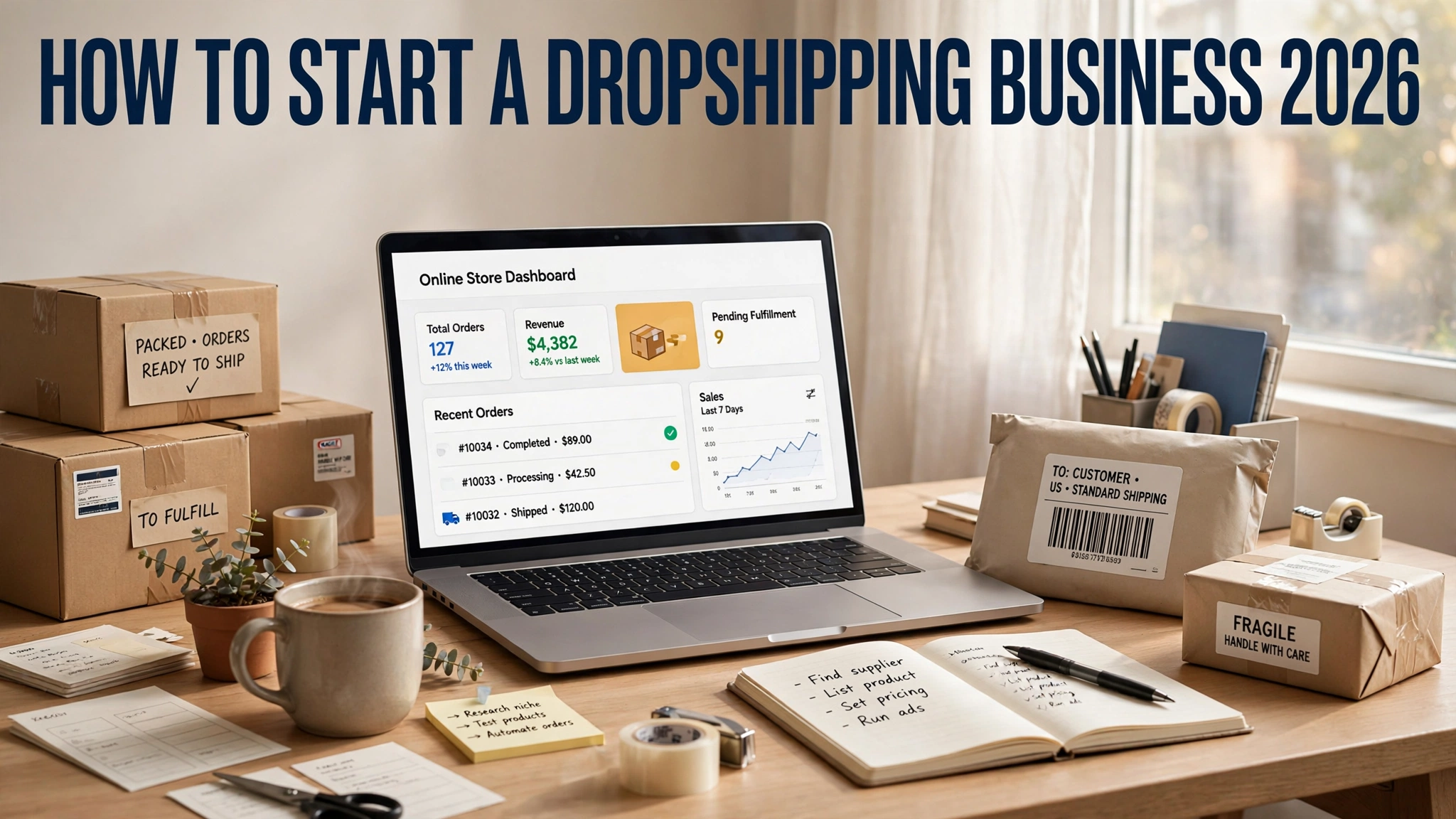
Dropshipping is one of the most talked-about ways to start an online business in 2026. The idea is simple and appealing. You set up an online store, list products from a supplier, and when a customer places an order, the supplier ships the product directly to them. You never touch the inventory, rent a warehouse, or pack a single box.
That simplicity is exactly why so many beginners are drawn to the model. You can launch with a modest budget, work from anywhere, and test products without buying stock in advance. But dropshipping in 2026 is also more competitive than it was a few years ago, and the easy profits of the early days are largely gone.
The sellers who succeed now treat dropshipping as a real business. They research carefully, test products, build stores that customers trust, and invest in marketing. This guide walks you through how to start a dropshipping business in 2026, step by step, with realistic numbers and practical advice.
Is Dropshipping Still Profitable in 2026?
The short answer is yes, but with important qualifications. Dropshipping remains a viable way to make money online in 2026. Industry data shows that most people doing dropshipping earn between $1,000 and $5,000 each month, while only a small fraction earn over $50,000 monthly. Beginner profit margins typically fall between 10 and 20 percent, rising toward 25 to 40 percent for experienced sellers.
Three realities shape the market today. First, competition is high, because popular products are sold by many stores at once, so you compete on marketing and customer service. Second, testing is essential, since most products you try will not sell, and you need to test several to find the few that work. Third, sustainability wins: a store with good reviews, clear policies, and reliable delivery outlasts one built on hype.
How Much Money Do You Need to Start
You do not need a fortune, but you do need a real budget. Most guides put the typical startup cost between $300 and $2,000 in 2026. A lean launch of $300 to $700 covers a basic store and small ad tests, while a standard launch of $800 to $1,500 adds professional branding, automation tools, and a larger testing budget. Most beginners need at least a few hundred dollars to test products seriously.
The fixed costs are modest. Shopify’s Basic plan costs $39 per month in 2026, a domain runs $10 to $25 a year, business registration ranges from free to a few hundred dollars, and supplier access runs from free with AliExpress to paid options like Spocket or CJ Dropshipping. But marketing is the most important line in the budget. The classic beginner mistake is spending everything on the store and leaving nothing for traffic, so reserve at least $250 to $500 for initial advertising, plus a $100 to $300 buffer for refunds and payment holds.
Choosing the Right Niche and Product
In 2026, selling generic products in broad categories rarely works. The winners go micro. Instead of pet products, they sell orthopedic dog beds for senior Labradors. Instead of phone accessories, they sell minimalist travel wallets for frequent flyers. A micro-niche lets you speak directly to a specific customer, target ads precisely, and charge better margins.
Look for products that solve a real daily problem or have a genuine wow factor, priced between $10 and $40, which is the sweet spot for impulse buys with room for profit. Lightweight, non-fragile items keep shipping costs down and reduce breakage complaints. Research where your customers spend time: scroll TikTok and Instagram Reels for engagement, check Amazon bestsellers for steady demand, and remember that a product appearing repeatedly in ads already has proven demand.
Finding a Reliable Supplier
Your supplier is your business partner, and choosing badly is one of the fastest ways to fail. Industry surveys report that 84 percent of retailers cite finding reliable suppliers as their biggest difficulty, so this step deserves real attention. A good supplier ships on time, communicates clearly, and stands behind product quality.
For global sellers, options include CJ Dropshipping for sourcing and fulfillment, Spocket and Zendrop for suppliers in the United States and Europe with faster shipping, and AliExpress, the largest free option, which needs careful vetting of individual sellers. Always check reviews, confirm shipping times in writing, understand the return policy, and order samples before selling, since customers blame you, not the supplier, when products arrive late or look cheap.
Building Your Online Store
You do not need a complex website to start. Shopify remains the most popular platform for dropshippers worldwide because it is built for selling and integrates easily with supplier apps. WooCommerce on WordPress is a strong budget-friendly alternative with more control and lower monthly costs. Some beginners also start on TikTok Shop or marketplace listings with zero platform fees.
Keep the store simple and trustworthy. A clean homepage, honest product descriptions with good photos, visible trust badges, a straightforward checkout, and clear shipping and return policies matter far more than fancy design. Many successful beginners start with a one-product store, which keeps the focus tight. Set accurate shipping expectations from day one, because honest delivery times prevent most customer service problems before they start.
Pricing Your Products for Profit
Pricing is where many beginners quietly lose money, so work from a simple formula. Add your product cost, your shipping cost, your estimated ad cost per sale, and your desired profit, and that total is your minimum selling price. Never compete on the lowest price. Compete on value, presentation, and trust instead.
If a product costs you $8, shipping is $3, and you expect to spend $6 in advertising per sale, your break-even is $17. Pricing at $29.99 leaves roughly $13 of gross profit per order before platform and payment fees of 2.4 to 2.9 percent plus about 30 cents per transaction. Watch your numbers weekly, and aim for margins that leave at least 20 to 30 percent net profit after all costs.
Setting Up Payments and Policies
Customers will not buy from a store that looks risky, so payments and policies deserve the same care as your product pages. For most global sellers, Stripe, PayPal, and Shopify Payments cover the major card and wallet options. In some markets, offering cash on delivery or local payment methods can dramatically increase conversions, so match your payment options to your audience.
Write your refund, shipping, and privacy policies in plain language and make them easy to find. They reduce chargebacks, calm nervous first-time buyers, and keep you compliant with consumer protection rules. Also keep a $100 to $300 financial buffer for refunds and payment holds, so an unlucky first week does not freeze your cash flow.
Marketing Your Store to Get Sales
Without marketing, dropshipping is dead, and this is the step beginners underestimate most. The most effective channels in 2026 are short-form video and targeted social ads. Organic TikTok and Instagram Reels can drive free traffic if your content is genuinely entertaining, and many successful stores start there before spending on ads.
When you move to paid advertising, start small and test. Meta’s Facebook and Instagram ads remain the workhorse, with beginners typically starting at $5 to $10 per day per product test, while smaller influencers often convert better than ads because the recommendation feels real. Follow a simple creative structure: show the problem, show your product solving it, show the result, and end with a clear call to action. Scale only what wins.
Mistakes Beginners Should Avoid
The first mistake is the budget trap: spending everything on the store and leaving nothing for traffic. The second is skipping product testing. Listing twenty products and hoping one sells is far less effective than testing three products properly with real ad spend and real data.
The third mistake is choosing suppliers on price alone: the cheapest option with three-week shipping costs you more in refunds and bad reviews than a slightly pricier reliable partner. The fourth is ignoring customer service, since fast, friendly replies turn complaints into repeat buyers. The fifth is giving up too early. Most dropshipping businesses need three to six months to reach consistent profitability, so patience combined with honest numbers beats hype every time.
Building a fortune from a business is not only for celebrity chefs. See how Gordon Ramsay built a $220 million fortune through television contracts, restaurants, and smart brand deals in our 2026 net worth breakdown.
Conclusion
Starting a dropshipping business in 2026 is genuinely accessible. With $300 to $2,000, a platform like Shopify or WooCommerce, a reliable supplier, and a willingness to test and learn, you can launch a real online store without holding a single item of inventory. The model is proven, the tools are mature, and the barriers to entry have never been lower.
But accessible does not mean easy. Competition is real, most products fail, and marketing is not optional. The sellers who win pick a tight niche, vet their suppliers, price with discipline, and treat every ad dollar as an investment in data. If you can do that, dropshipping remains one of the most practical first businesses you can start online in 2026.


One thought on “How to Start a Dropshipping Business in 2026”